
What is Wet Rot
More common than dry rot, wet rot is caused by a fungus called Coniophora puteana, aka the ‘cellar fungus’. This type of fungus is only attracted to very damp wood or plaster and unlike dry rot, remains confined to the wet area only. It’s generally deemed less destructive than dry rot but serious cases can prove hazardous to a building’s structure.
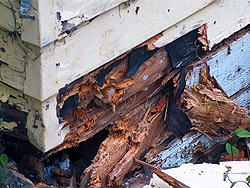
What are the symptoms of wet rot?
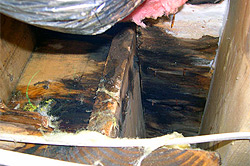
Wood with wet rot has a typically soft and spongy feel and often looks darker than surrounding healthy wood. If the wood is painted it can mask the decay and appear quite healthy; it’s only by poking with a screwdriver you’ll discover if it’s affected. On walls the fungus manifests with brown/black strands in a fern-like pattern.
How is wet rot treated?
Wet rot, as its name implies, is present when there’s direct and sustained contact with water, so the first step is eliminating the source of ingress as above.
The second step is removing and replacing affected timbers. If only a small area has been affected the rotten wood should be removed back to sound timber and the surrounding area treated with an epoxy wood hardener and preservative. If timbers are structural Eurocode 5 again comes into play so new timbers must be pre-treated as above with cut-ends and joints re-treated. On brickwork or plaster wet rot can easily be removed using a wire brush.
Help with Wet Rot
K R Building Preservation are specialists in Wet Rot covering areas Perth & Kinross, Dundee, Fife & Edinburgh and will be happy to do a free survey on your property.
Our Wet Rot treatment is guaranteed for 20 years.
Please call or submit our Free Survey Request form.